01
Quantum simulation
Simulating quantum many-body dynamics is among the most compute-hungry problems in science. We search for new simulation algorithms and verify them against exact solutions and conserved quantities.
Algorithmical Superintelligence builds agent swarms that invent, verify, and open-source new algorithms for physics, starting with quantum simulation and real-time quantum error correction.
01 — Thesis
AI is on the verge of transforming mathematics for a simple reason: proofs can be checked by machine. An agent can attempt a million ideas, and a verifier, not a human referee, tells it which ones are right. Verification turns raw compute into reliable discovery.
Physics has verifiers too: exact solutions in limiting cases, conservation laws and symmetries, hard benchmarks, and ultimately experiment. Wherever a physical problem can be stated formally and checked automatically, a swarm of agents can search a space of algorithms far larger than any research group could explore.
ASI usually stands for artificial superintelligence. We mean something more specific: algorithmical superintelligence, systems that design the algorithms the physical sciences run on.
The verifiers
01
Correctness guarantees written in Lean and checked by a proof kernel, not a reviewer.
02
Conservation laws, symmetries, and exactly solvable limits that any valid simulation must respect.
03
Logical error rates, latency budgets, and fidelity against ground truth. Numbers that settle arguments.
02 — Approach
We pick problems where success is measurable, then let agents iterate against the measurement.
01
Turn a physics problem into a precise specification with an automatic checker.
02
Swarms of agents propose, implement, and mutate candidate algorithms in parallel.
03
Every candidate is proven correct, tested against invariants, or benchmarked, automatically.
04
What survives becomes open-source code and a paper.
Many coordinated agents exploring algorithm space in parallel and sharing what works.
Problem-specific environments that score every idea, so the search never relies on taste.
Compute orchestration built to run millions of candidate evaluations per problem.
Learned models of physical systems that let agents reason about an idea before simulating it.
03 — Research
Problems that matter, admit automatic checks, and where a better algorithm changes what is possible.
01
Simulating quantum many-body dynamics is among the most compute-hungry problems in science. We search for new simulation algorithms and verify them against exact solutions and conserved quantities.
02
A fault-tolerant quantum computer needs a decoder that reads error syndromes and corrects them within microseconds, indefinitely. We design decoders that are faster and more accurate, benchmarked by logical error rate under strict latency budgets.
03
Maximum-likelihood decoding is an integer optimization problem usually handed to commercial solvers such as Gurobi. Our agents rebuild these solvers from scratch, in the open, and specialize them to the problem.
04
Many-body systems, materials, fluids: any domain where a simulation can be checked against physics is a candidate for agentic discovery.
04 — Open science
An algorithm is only as valuable as the trust placed in it. Every result we stand behind ships with code, a paper, and the verifier that checks it, so anyone can reproduce it.
05 — Team
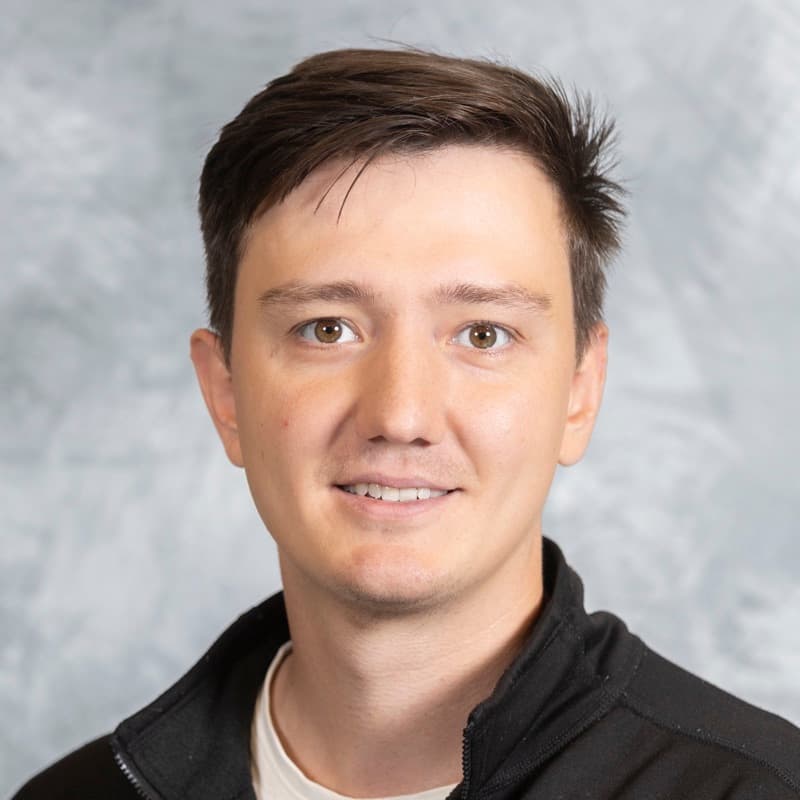
Founder & CEO
Physicist and quantum error correction engineer. Rafael builds software for fault-tolerant quantum computers, including Tsim, a fast universal simulator for quantum error correction, and brings experience developing QEC software at QuEra Computing.
His research spans quantum error correction, topological phases, superconductivity, and quantum simulation on noisy quantum hardware.
Published in Physical Review Letters · Nature Communications · Science Advances
Selected work
arXiv:2604.01059, 2026
Nature Communications, 2026
Physical Review Letters, 2020
We're assembling a small founding team of physicists, ML researchers, and engineers. If you want to build superintelligence for physics, get in touch.
06 — Contact
We're building the team and the compute to make algorithmic discovery routine.
rafael@algorithmical.si